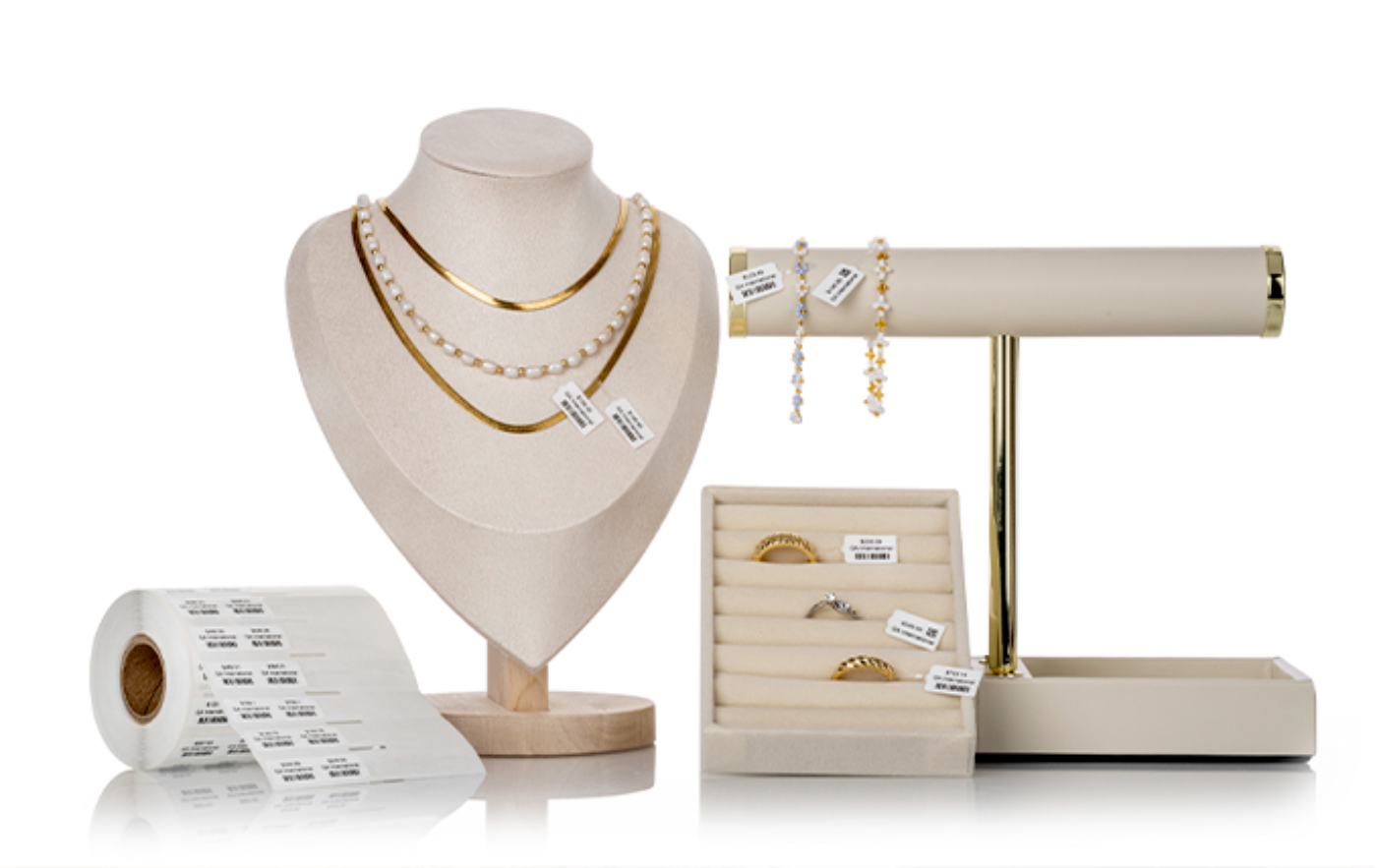
Jewelry labels are the tags and stickers attached to rings, necklaces, bracelets, and other fine pieces. No matter what type of jewelry inventory you manage, ensuring every piece is correctly labeled is crucial. Understanding what they are, how they work, and what separates a quality label from a poor one can make a measurable difference in how your business operates.
Q: How to write or print on tiny jewelry labels?
A: A thermal transfer printer paired with a wax-resin ribbon is the best way to print on tiny jewelry labels. You can opt for writable labels if you wish to write manually on them with a permanent marker.
Q: How to make custom labels for jewelry packaging?
A: Using software like BarTender or ZebraDesigner allows precise control over layout, barcode placement, and sizing. IndustriTAG offers full custom printing and manufacturing services as well, so if you need branded labels produced in a specific size, shape, or finish, the team can handle the design and production from start to finish
Q: Do you need to label handmade jewelry?
A: Although not required by law, it is best practice to label all of your goods. This benefits both parties; the customer can obtain all valuable information at a glance, and the business owner can simplify inventory and asset tracking.
Why Proper Label Printing Matters
Proper label printing matters particularly in the jewelry industry because it does a lot more than simply display a price. It can communicate the item’s metal type, gemstone details, karat weight, SKU, and barcode, information that matters to both the customer and the staff scanning items at checkout. When labels are smudged, peeling, or barely legible, the result is confusion at the point of sale, slower inventory counts, and a less professional impression on the shop floor.
Understanding Jewelry Tag Best Practices
Before selecting a label material or format, it helps to understand what makes a jewelry label effective in practice. A few foundational principles stand out:
Match the label to the surface
Smooth metal surfaces require a different adhesive than fabric pouches or cardboard tags. Using the wrong adhesive type leads to labels that slide off, leave residue, or won’t adhere at all.
Size it appropriately
Jewelry is small. Labels need to fit on a ring band, a pendant, or a bracelet clasp without covering the piece itself. Compact sizing is non-negotiable, but the text still needs to be legible.
Include the right data
At a minimum, a jewelry label should carry a SKU or item number and a barcode for scanning. Many retailers also include price, metal type, stone details, and weight. Thermal-transfer printing allows all of this information to be packed clearly onto a very small surface.
Protect the print
Inks and ribbons that aren’t designed for fine detail work will produce blurry barcodes and faded text. For jewelry tags, wax-resin ribbons are typically the preferred choice since they produce sharp, durable print that holds up against repeated handling.
What Are the Most Common Types of Jewelry Tag Shapes?
Jewelry tags come in a range of shapes, each suited to specific applications:
- Dumbbell Labels: These labels are specifically designed for rings and other such pieces. The narrow center sits in the band while the wider ends display the label information.
- Rat Tail Labels: These labels dangle from the piece, giving retailers more surface area to work with while keeping the label removable for the customer.
The right shape depends on the product, the display method, and whether the label needs to be permanent or removable.
Why Is High-Resolution Printing Essential for Jewelry Tags?
A barcode that doesn’t scan is almost worse than no barcode at all because it disrupts operations, creates delays, and undermines inventory accuracy. On a jewelry tag, where label real estate is measured in millimeters, print resolution becomes critical.
Thermal-transfer printing is the industry standard for jewelry labels precisely because it delivers the sharpness required. When paired with a high-quality resin ribbon, it produces crisp barcodes that scan reliably and fine text that remains legible even at very small point sizes.
High-resolution printing also matters for brand perception. Tags that look sharp and clean signal that a jeweler takes their presentation seriously, which reinforces customer confidence in the products themselves.
Why Is Durability Crucial for Fine Jewelry Labelling?
Fine jewelry is handled constantly, whether it’s by sales staff or customers browsing the case. Labels that degrade quickly under this kind of use create ongoing operational headaches. Durability considerations for jewelry labels include:
- Moisture resistance: Display cases are cleaned with liquid solutions, and jewelry itself may come into contact with water. Labels must resist moisture without softening, smearing, or lifting.
- Smudge and scratch resistance: Print on a jewelry tag needs to survive repeated handling without fading. Resin-printed thermal-transfer labels offer significantly better scratch resistance than wax-based alternatives.
- Adhesive reliability: For adhesive labels, the bond needs to hold against the smooth, often polished surfaces of jewelry and its packaging. Low-quality adhesives peel or slide, especially in display case conditions with variable temperature and humidity.
Investing in durable labels keeps your inventory looking professional day after day.
IndustriTAG Jewelry Tags Make a Difference
IndustriTAG offers a full range of jewelry labels suited to precise, small-format printing applications, including price tags and printable tag formats designed for retail and product identification. With full customization available, getting the right label for your specific jewelry application has never been more straightforward.